
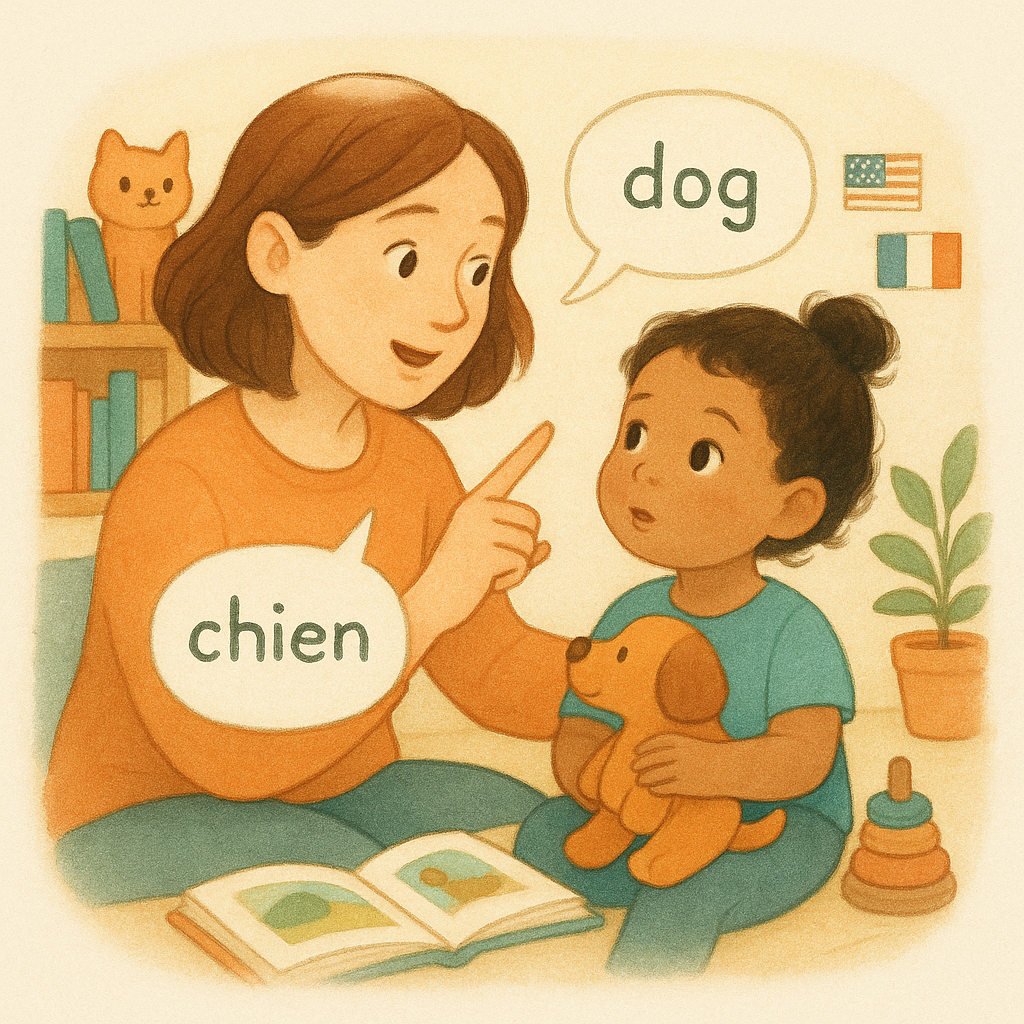
Navigating Grammar Corrections for Bilingual Children
As a parent raising a bilingual child, you might often wonder about the best way to handle those adorable grammar mishaps. Should you correct them immediately, or let them pass?
Reassurance for Overwhelmed Parents
The good news is that occasional grammar lapses are a natural part of bilingual development. Many bilingualism experts agree that language mixing, or ‘code-switching,’ is common and doesn’t mean your child is confused. Instead, it’s a sign they’re skillfully navigating both languages.
Understanding the Issue
When children learn two languages, they may borrow structures and vocabulary from one language to help them express ideas in the other. This is a vital part of language acquisition. Correcting every error can lead to pressure, which might stifle their enthusiasm for speaking both languages.
Normalizing Language Mixing
This can feel worrying at first, but language mixing is completely normal. Imagine a day in the life of a bilingual toddler: one moment they’re playing with siblings using English, and the next they’re enjoying a story in their heritage language with grandparents. Each interaction builds a rich linguistic tapestry.
Real-Life Family Examples
Consider meal times, a perfect opportunity for language enrichment. You might ask, “Do you want arroz or rice?” Here, you’re modeling vocabulary in both languages seamlessly. At bedtime, choose a bilingual picture book. Let your child guess the words in each language, offering gentle corrections only if they seem frustrated.
Correcting Myths
There’s a common myth that correcting grammar consistently leads to better language skills. However, early childhood educators often note that children learn best when language is modeled positively. Small routines, like narrating your day in both languages, create a comforting and educational environment.
What Parents Can Do Today
Here are a few nurturing strategies:
- Model Correct Grammar: Instead of directly correcting, repeat your child’s sentence with the right structure.
- Create Language-Rich Environments: Engage in activities like cooking or gardening while naming ingredients or tools in both languages.
- Praise Attempts: Celebrate their achievements to build confidence and encourage attempts without fear of making mistakes.
Encouragement for Your Language Journey
What matters most is providing a loving space for exploration. Remember, your child is already achieving something incredible by communicating in two languages. Whether at daycare or during family gatherings, each interaction is a learning opportunity.
At NidoVoix, we celebrate every bilingual milestone. For more supportive advice and heartfelt encouragement, explore our [gentle language support](#) resources.
References
- American Speech-Language-Hearing Association (ASHA) — Information about bilingual language development
- American Academy of Pediatrics — Early language milestones
- UNICEF Parenting — Supporting multilingual children
- Montessori Foundation — Language development in early childhood